Translating Academic Nanoparticle IP Into a Drug Development Program
Nasal nanoparticles could deliver GLP-1 to the brain more safely.

GLP-1 receptors sit in the hippocampus and the prefrontal cortex, the parts of the brain that handle memory, learning, and impulse control. That placement means central nervous system GLP-1 agonism is a target the pharmacology was always meant to reach. Preclinical work has tied activation of these receptors to reduced brain inflammation, better neuronal insulin signaling, and faster clearance of amyloid-beta, alpha-synuclein, and mutant huntingtin through the cell's own proteostasis pathways, the housekeeping machinery that clears misfolded proteins. None of that biology is in question. What is in question, and what the rest of this piece works through, is whether the subcutaneous injection that carries GLP-1 peptides into the body today can actually get the drug to those receptors at a dose that does any of this work, without wrecking the patient's gut along the way.
The blood-brain barrier converts a delivery limitation into a clinical failure
The blood-brain barrier didn't evolve to make drug development hard. It evolved to keep large, polar molecules out of brain tissue, and GLP-1 peptides happen to fall squarely into that excluded class. The dose that does reach the brain is a fraction of what was injected, while the full dose keeps circulating through the gut and the rest of the periphery the entire time.
This creates a bind that no amount of dose-tweaking can escape. Central access and peripheral tolerance are locked to the same circulatory route, so improving one by injection necessarily worsens the other. That structural coupling, not an underpowered molecule or an imprecise dosing schedule, is why GI side effects dominate the reasons patients give for quitting GLP-1 therapy, and why patients with a prior history of GI medication use turn out to be more likely to drop out in the first year: their gut was already primed to react before the drug ever got there.
The nasal route's capabilities and limits
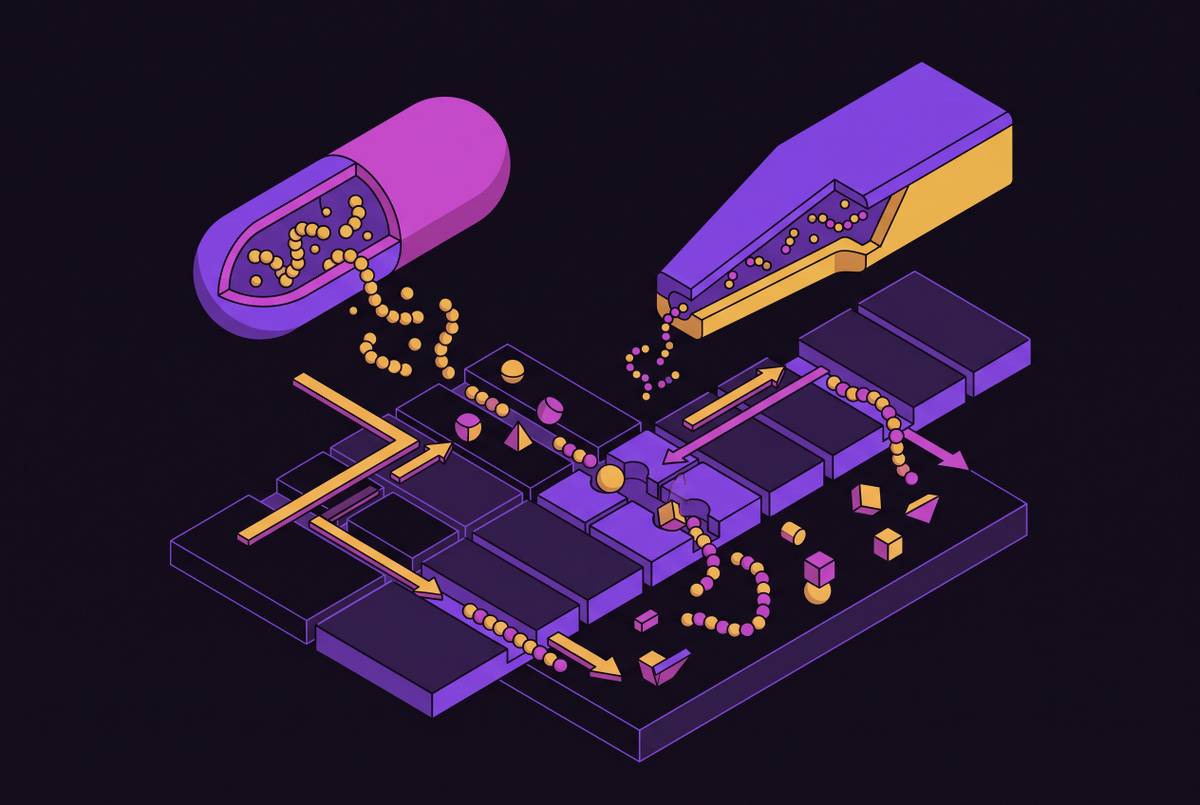
If the problem is a circulatory route that couples brain exposure to gut exposure, the fix has to be a route that skips circulation. It is a specific anatomical pathway, and it has peptide-class precedent: GLP-1 and GLP-2 derivatives carrying functional sequences have been shown, in mice, to move rapidly along trigeminal axons after intranasal dosing. The pharmacokinetic case for the nasal route over oral dosing is concrete too, with nasal administration producing dramatically higher brain concentrations of harmine nanocrystals than the oral form of the same compound achieved.
Unformulated peptide sprayed into the nasal cavity runs into a set of problems that have nothing to do with the brain and everything to do with the first few millimeters of tissue it touches. Peptides are large and enzymatically fragile, which makes them especially vulnerable to all three problems at once. So the nasal route opens an anatomical path to the brain, but it does not by itself solve the problem of getting a fragile peptide across the mucosal layer intact. That is a necessary condition, not a sufficient one, and it's why the next piece of the puzzle has to be engineering, not just anatomy.
Nanoparticle engineering turns the nasal route from a hypothesis into a viable delivery system
Nanocarrier design converts the nasal mucosa from an obstacle into something a drug can actually pass through, addressing each of the three failure modes named above individually. Encapsulating the peptide inside a nanocarrier physically shields it from mucosal proteases, the enzymes that would otherwise cut it apart before absorption even starts. Surface modifications on the particle can promote mucosal adhesion, extending how long the formulation sits in contact with the nasal epithelium and directly counteracting the sweeping action of mucociliary clearance. And because nanocarriers can be built to release their payload on a controlled schedule rather than dumping it all at once, they avoid the scenario where most of the dose gets cleared before neurons ever have a chance to take it up.
Particle size turns out to be one of the central design variables, not a detail to settle late. Particles at 80 nanometers and 175 nanometers distributed differently through the tissue. The size of the particle determines which cells it interacts with and which route it travels, so choosing a particle size is choosing a biological pathway, not just a manufacturing specification.
The field has several carrier classes to draw from, including lipid-based particles, polymeric particles, protein-based particles, and inorganic particles, each with its own stability profile, drug-loading capacity, and options for surface engineering. The clearest published example of this entire approach applied specifically to a GLP-1 molecule comes from a 2026 paper in the International Journal of Pharmaceutics, which describes a thermoresponsive PNPHO nanocarrier built for intranasal delivery of semaglutide, aimed at appetite control centers in the brain, with reduced patient compliance under subcutaneous dosing named explicitly as the reason the formulation was developed. It is the closest thing in peer-reviewed literature to a direct convergence of a GLP-1 molecule, a nasal nanocarrier, and a CNS metabolic target, making it a useful marker of where the science currently stands.
The clinical evidence that makes intranasal nanoparticle GLP-1 delivery a credible program, not a preclinical curiosity
None of the engineering above would matter if GLP-1 agonism in the brain had no clinical signal behind it. It does, and the signal is strong enough to be worth taking seriously even though it comes from delivery routes that reach the brain poorly. In the LixiPark trial, lixisenatide slowed motor progression in Parkinson's disease patients. Both drugs were delivered by subcutaneous injection, the route this piece has argued provides only limited central access, which makes the central effect that showed up a meaningful signal.
The EVOKE and EVOKE+ trials tested oral semaglutide in Alzheimer's disease using the CDR-Sum of Boxes as the primary measure, and the completed phase 3 results did not meet that primary endpoint. A separate line of evidence comes from a WashU Medicine study of more than two million veterans, which found GLP-1 receptor agonist use associated with reduced risk of seizures and reduced risk of addiction to alcohol, cannabis, stimulants, and opioids, alongside decreased risk of suicidal ideation, self-harm, bulimia, and psychotic disorders. That is an unusually broad neuropsychiatric signal to come out of a single real-world population.
Every one of these results was produced by a route that gets an acknowledged fraction of its dose into the brain. If a drug delivered inefficiently to its target still produces measurable central effects, a formulation engineered for direct CNS access should be expected to strengthen those effects. That is the logical next step the trial data points toward, not a separate bet.
Adherence collapse in the injectable market defines the commercial opening for a non-injection program
The clinical case for CNS-targeted GLP-1 delivery would be an academic exercise if patients could simply tolerate the injectable version long enough to benefit from it, and most patients mostly cannot. A 2025 cohort study of 125,474 patients published in JAMA Network Open found that nearly half of patients with type 2 diabetes, and roughly two-thirds of patients without diabetes, had stopped taking their GLP-1 receptor agonist within a single year. The attrition starts even earlier than that: an IQVIA analysis found a substantial share of approved GLP-1 prescriptions are never filled at the pharmacy at all, and a further large share are abandoned after just one fill. A Prime Therapeutics analysis of a patient cohort starting in 2021 found that only a small fraction of patients were still on therapy three years out.
What's striking is what patients say when asked why they stopped. Adverse drug reactions, dominated by gastrointestinal effects, account for more than a quarter of documented discontinuations, ahead of cost and general non-adherence. That lines up exactly with the mechanism described two sections back: GI toxicity is not a side issue that happens to accompany injectable GLP-1 therapy; it's the direct downstream consequence of a delivery route that cannot separate central dosing from peripheral exposure. The population affected is close to the majority of everyone who starts the drug. A formulation that reaches CNS targets directly while reducing peripheral GI exposure is not a modest improvement on the injectable version. It changes what kind of treatment experience is on offer for the population that currently cannot stay on therapy long enough to benefit from it.
The structural steps that convert academic nanoparticle IP into a fundable drug development program
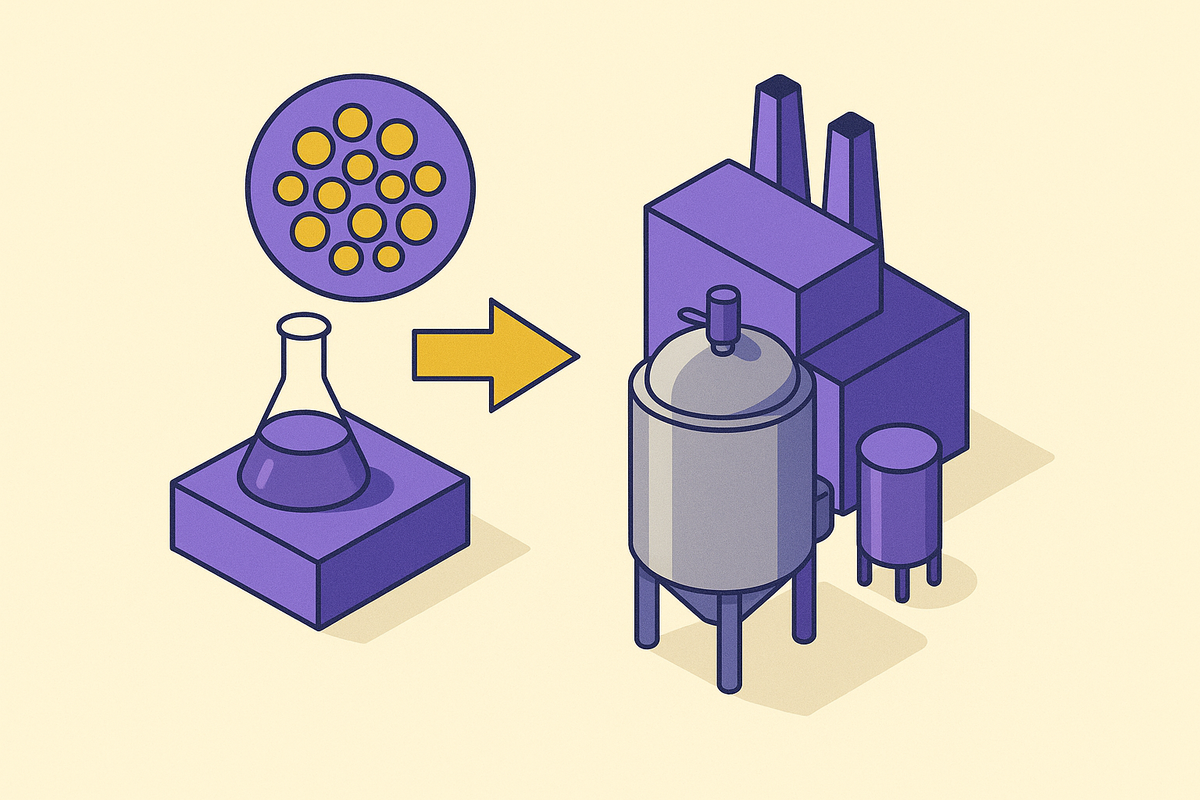
Everything above establishes why the science and the market both point toward a nose-to-brain nanoparticle GLP-1 program. Getting there from a lab's worth of nanoparticle patents requires a specific sequence of decisions, and delivery constraints shape each one.
Patent landscape characterization comes first.
Indication selection follows, and the delivery route itself narrows the field. Nose-to-brain delivery opens the door to addiction treatment, neurodegenerative disease, and appetite regulation all at once, but a drug program can only run one lead indication through a regulatory pathway at a time. Different brain regions, different timelines for target engagement, and different safety bars will each favor different formulation choices, so the delivery mechanism itself should be what decides which indication goes first.
IND-enabling studies follow the candidate lock. The FDA requires evidence of safety, pharmacokinetics, and manufacturing reproducibility before a drug can enter human trials, and for an intranasal nanoparticle this means nasal tolerability studies, confirmation of CNS biodistribution, and stability data specific to the chosen formulation, all built on the specification decided in the step before.
And finally, the IP has to move from a university lab into a company through formal licensing or assignment, usually by way of a technology transfer office. The specific technology and financing differ entirely from a GLP-1 nanoparticle program, but the structural path, academic IP to formal spinout to seed-stage company, is the same one any program in this space would need to walk.
The translation gap between nanoparticle preclinical promise and clinical approval
Anyone who has watched nanoparticle drug development over the past two decades has reason for skepticism here. The GLP-1 CNS data has its own counter-evidence too: a 2026 meta-analysis of randomized controlled trials found that GLP-1 receptor agonists did not improve memory or cognition in Alzheimer's patients on established outcome measures, and researchers at UCSF have pointed out that whatever benefit GLP-1 drugs show in dementia may come from improved vascular and metabolic function on amyloid or tau.
One might argue that the nasal route adds its own fresh set of problems on top of this. Nasal anatomy and physiology vary meaningfully from person to person, mucociliary clearance rates differ across individuals, and no standardized regulatory framework yet exists specifically for intranasal nanoparticle biologics. These are real gaps, not hypothetical ones.
But what do the failed nanoparticle programs actually have in common when examined closely? The program should be designed around the gaps that sank earlier nanoparticle efforts: CNS biodistribution studies run early in relevant animal models, particle specifications fixed and tied to a defined manufacturing process, and stability data built from the start to support an IND filing. The direction the field is moving, toward multifunctional nanocarriers that combine mucoadhesive and stimuli-responsive elements with more precise, patient-specific formulation strategies, points to design sophistication as the thing that will separate the next successful program from the last failed one.
Scientific and investor credibility for a nose-to-brain nanoparticle GLP-1 program
A program like this earns trust by demonstrating CNS targeting at every stage, not by stating it as a premise. That means defined particle specifications instead of a general description of the carrier class, measurable CNS biodistribution data instead of a projection, and a manufacturing process built to survive regulatory scrutiny instead of one assembled after the formulation is already locked.
It also helps to build on ground that is already solid. A nanoparticle program built on an established GLP-1 peptide inherits that safety foundation rather than generating it from zero, and the delivery-specific safety work, nasal tolerability, CNS exposure, mucosal irritation, gets layered on top of a known molecule instead of being bundled with the risk of an unproven one.
Patent depth does more than protect a formulation from competitors. Starting with a metabolic or appetite-control target, where the CNS mechanism is clear and the regulatory path well defined, builds the pharmacokinetic and safety database needed before a program takes on something like full Alzheimer's disease, where the evidentiary bar has only gotten higher after the recent trial results described above.
An unmet adherence problem affecting most patients who start injectable GLP-1 therapy, a body of nose-to-brain nanoparticle science that has matured enough to name specific design variables, and a widening set of clinical signals for GLP-1 agonism in the brain are converging at the same time. But the opening it creates is only as good as the program built to meet it. What separates a credible nose-to-brain GLP-1 nanoparticle program from the long list of nanoparticle platforms that stalled before reaching patients is whether the particle specifications are fixed, the biodistribution is measured rather than assumed, and the manufacturing process was built to survive the regulators who will eventually have to sign off on it.
Sources
- Navigating the Nose-to-Brain Route: A Systematic Review on Lipid-Based Nanocarriers for Central Nervous System Disorders
- Lipid and Polymeric Nanoparticles: Successful Strategies for Nose-to-Brain Drug Delivery in the Treatment of Depression and Anxiety Disorders
- Advancements in Nanocarrier Systems for Nose-to-Brain Drug Delivery
- Nose-to-brain drug delivery: from bench to bedside
- Emerging Frontiers in GLP-1 Therapeutics: A Comprehensive Evidence Base (2025) - PMC
- Can Blockbuster GLP-1 Weight-Loss Drugs Also Protect Brain Health?