GLP-1 Receptor Distribution in the Brain and CNS Pharmacology
Brain GLP-1 receptors span reward, appetite, and cognition circuitry, reshaping how the drugs work.
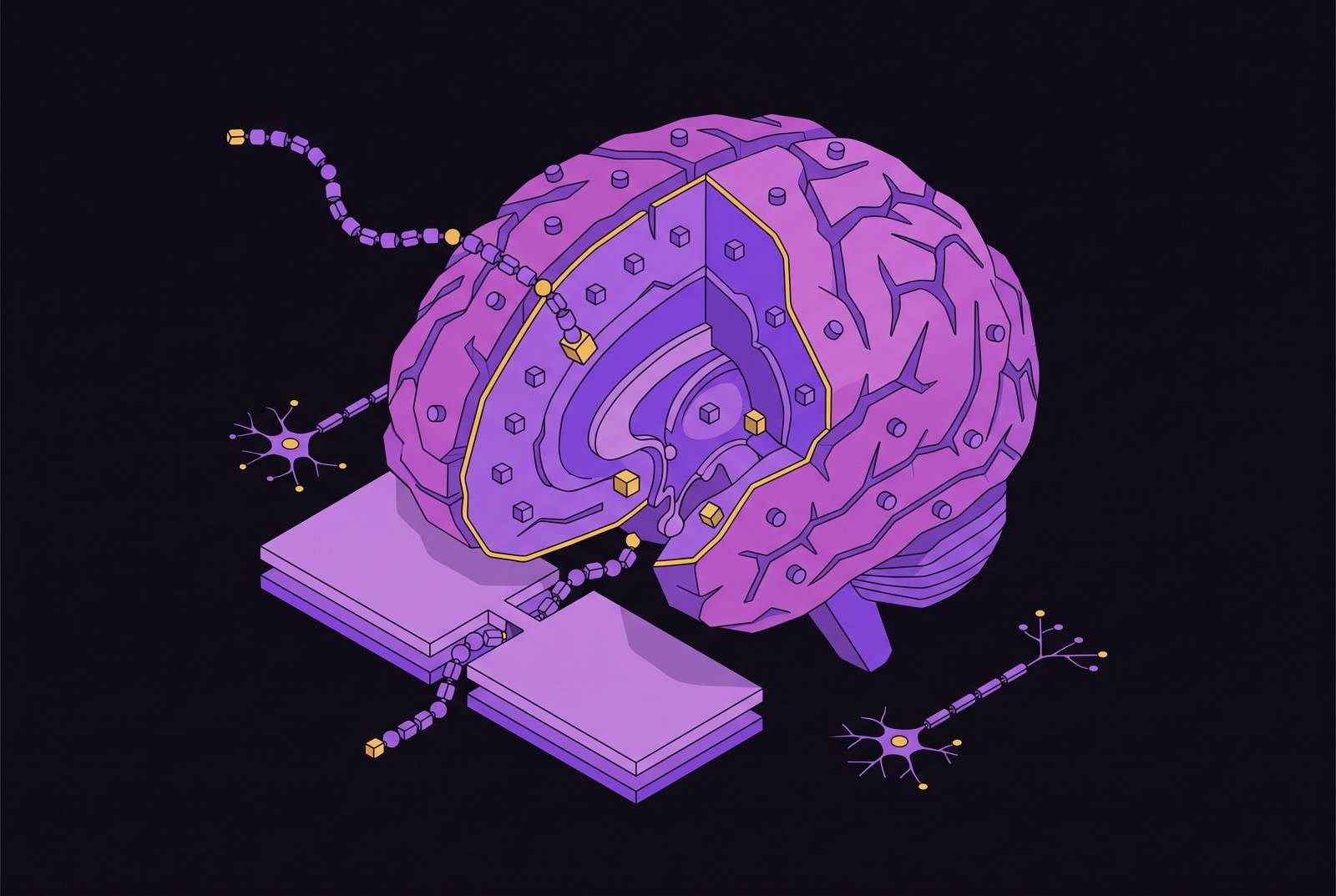
GLP-1 does far more in the body than manage blood sugar, and the reason traces back to where its receptor actually sits: not just in the pancreas, but scattered across multiple discrete brain regions, from the hypothalamus to the reward circuitry that governs craving and habit. That anatomical fact, more than any single drug trial, explains why GLP-1 pharmacology touches appetite, nausea, cardiovascular risk, memory, and addiction all at once. Most of the public conversation about these drugs still treats the brain effects as side notes to a metabolic story. The anatomy says that ordering has it backwards, and the rest of this piece works through why.
GLP-1 as a brain hormone, not just a gut peptide
GLP-1 gets made in two places that have almost nothing to do with each other. One is familiar: enteroendocrine L cells lining the gut, which release GLP-1 after a meal to help manage insulin and slow digestion. The other is a population of neurons inside the brain itself, called preproglucagon (PPG) neurons, and this second source matters more for CNS effects than most popular explanations let on.
The best-mapped cluster of PPG neurons sits in the brainstem, mostly in the nucleus tractus solitarii (NTS) and the intermediate reticular nucleus (IRT). Smaller pockets show up in the olfactory bulb, the piriform cortex, and the lumbar-sacral spinal cord. The brain grows its own GLP-1 supply, separate from anything digestion produces. Calling GLP-1 a "gut hormone" is technically true and functionally misleading once the brain turns out to be running its own parallel operation the whole time.
Brain-derived GLP-1 doesn't behave like a hormone drifting through the bloodstream, either. It gets released at axon terminals, operating through synaptic mechanisms more characteristic of neurotransmitters than of circulating hormones. What still isn't settled is which source, gut or brain, does the work behind any given effect, and that gap is not small. Treating GLP-1 as a digestive signal that occasionally reaches the brain is a different claim entirely from treating it as a neurotransmitter that happens to also get made in the gut. The evidence increasingly favors treating GLP-1 as a neurotransmitter that happens to also get made in the gut, over treating it as a digestive signal that occasionally reaches the brain.
Why gut-released GLP-1 almost certainly never reaches the brain
Gut-derived GLP-1 doesn't get far after a meal. Its half-life in circulation is measured in minutes, chewed up almost immediately by an enzyme called DPP-4. By the time blood carrying that GLP-1 could reach brain tissue, most of it has already been broken down.
Even the fraction that survives runs into a second wall: the blood-brain barrier, built specifically to keep large biological molecules like GLP-1 out of central tissue. It does that job well. So a peptide that somehow dodges DPP-4 still has almost no route past the barrier.
Those two facts point to a fairly hard conclusion, and it cuts against how most people picture the system. GLP-1 receptors inside the blood-brain barrier are meant to be reached by PPG neurons firing locally, not by peptide arriving fresh from a meal. Anyone assuming that a bowl of food, or a spike in gut GLP-1, is directly talking to the hypothalamus has the mechanism backwards. Gut-derived GLP-1 may act on peripheral nerve endings or on circumventricular organs, the handful of brain regions that sit outside the barrier by design and stay exposed to blood-borne signals, though the precise route remains an open question.
That distinction sets the real engineering problem for anyone building a GLP-1 receptor agonist meant to act centrally. The drug has to cross the barrier by design, exploit one of those unprotected circumventricular windows, or take a delivery route that avoids the barrier. Get that choice wrong and the drug never reaches the neurons it's supposed to influence, no matter how well it performs in a dish.
The Region-by-Region Map of GLP-1 Receptors in the Brain
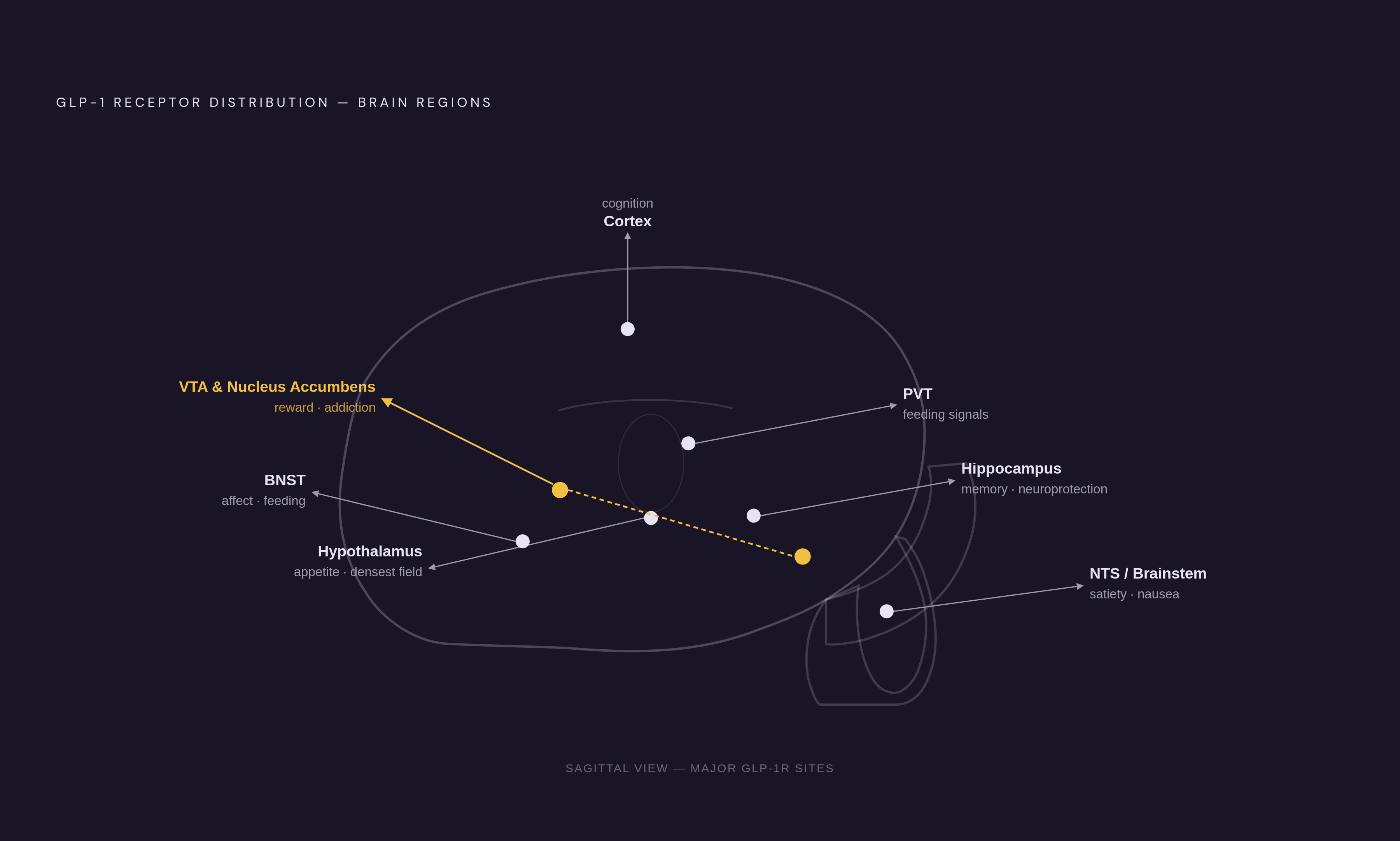
GLP-1R is a class B G protein-coupled receptor, and its footprint across the CNS is wide. Axons from the brainstem's PPG neurons stretch out across the brain, and the single densest terminal field is the hypothalamus, a region with no PPG cell bodies of its own that still ends up soaked in active GLP-1.
The hypothalamus is a central site behind appetite suppression, the effect most people associate with these drugs. The NTS handles satiety signaling and folds into vagal nerve circuits. The bed nucleus of the stria terminalis (BNST) is another GLP-1R-bearing region implicated in affective and feeding-related processing. The paraventricular nucleus of the thalamus (PVT) is a further GLP-1R target region, while the mesolimbic system, the ventral tegmental area and nucleus accumbens together, is implicated in reward-related behavior more broadly. Cortex and hippocampus round things out, tied to cognition and to whatever neuroprotective effects GLP-1 signaling turns out to have.
That's a lot of ground for one receptor to cover, and it raises a specific question rather than a general sense of wonder. Which of these populations actually drives the weight loss seen in patients, and which ones generate side effects like nausea? The map shows where the receptor sits. It doesn't say, region by region, what firing it actually accomplishes, and that gap is where substantial future GLP-1 research remains to be done.
Effects of the Receptor Map Well Beyond Blood Sugar
Once the receptor map is on the table, the "extra" effects of GLP-1 drugs stop looking like curious side observations. They start looking like predictable consequences of anatomy.
Appetite suppression is the clearest case. Hypothalamic GLP-1R activation lowers energy intake, and CNS signaling is broadly understood to contribute to the 7 to 24% body weight reduction seen in clinical use of GLP-1 receptor agonists. Nausea and vomiting follow the same logic pointed a different direction. Brainstem GLP-1R activation, in regions including the area postrema, is implicated in those GI side effects. That cuts against the intuitive explanation most patients reach for. The stomach isn't running the discomfort. The brainstem runs its own aversion circuit, and the gut gets blamed for something it didn't do.
Cardiovascular protection adds another layer. GLP-1 receptors sit directly on cardiovascular tissue, and clinical data show a 14 to 20% reduction in major adverse cardiovascular events among patients on GLP-1 receptor agonists. The mechanism behind this cardiovascular benefit is not fully resolved, with both peripheral and central GLP-1R pathways under investigation.
Then there's cognition. GLP-1R shows up in the hippocampus and cortex, regions tied to memory and higher-order processing, and a 2025 meta-analysis pooling 26 randomized trials and more than 160,000 patients found GLP-1 therapies linked to a statistically significant drop in dementia risk and cognitive impairment. None of these findings sit outside the receptor map. They sit exactly where the map predicts, which is the point of building the map.
GLP-1 receptors in addiction and reward circuitry
PPG neurons in the NTS send projections broadly across the brain, reaching reward-relevant regions involved in craving and compulsive behavior. Applebey and colleagues, cited in work by Trapp and Skoug, describe the brainstem GLP-1 system as one that dampens motivation and reward-seeking generally, well past anything related to food.
One finding does a lot of work here: activating PPG neurons in the NTS cuts nicotine intake in experimental models. That's direct evidence that an endogenous GLP-1 circuit, one the body builds and runs on its own, shapes substance-use behavior with no drug involved.
The mechanistic case follows straight from the map. GLP-1R expression in the ventral tegmental area and nucleus accumbens puts the receptor right in the middle of dopaminergic reward processing, the exact circuitry implicated in substance dependence, compulsive eating, and other behavioral addictions. Coverage from NeurologyLive lists sleep disorders, Parkinson's disease, stroke, and headache conditions among the neurological indications currently being explored for GLP-1 receptor agonists. Addiction gets folded into a vague, unnamed category of "other emerging neurologic indications." That placement undersells what the anatomy is showing. Addiction deserves to be a named, front-line research target, not a footnote buried under broader neurology, and the field's caution here looks more like an artifact of where the funding and trial infrastructure already exist than a reflection of what the biology says.
The blood-brain barrier problem for peripheral GLP-1 drugs
Preclinical work shows that some long-acting GLP-1 receptor agonists cross the blood-brain barrier in rodents and bind central neuron populations tied to weight regulation. That's a real finding, and it doesn't mean the receptor is a viable drug target. Treating it as such is where a lot of the optimism around CNS-targeted GLP-1 drugs gets ahead of the data.
The EVOKE and EVOKE+ trial results raise an uncomfortable question. If a drug crosses the barrier in animal models, why did it fail to slow Alzheimer's progression in people, even while shifting cerebrospinal fluid biomarkers? Among the explanations on offer are insufficient CNS drug exposure, wrong target region, wrong patient population, and timing that missed the disease's actual window of vulnerability. That remains an explanation rather than a settled answer, and the gap matters, because the next trial needs a different molecule or a different dose depending on which explanation turns out to be right.
Blood-brain barrier crossing by GLP-1 receptor agonists is fairly well established in rodents, but how that translates into human CNS pharmacodynamics stays an open question. Blood-brain barrier crossing by GLP-1 receptor agonists is fairly well established in rodents, but how that translates into human CNS pharmacodynamics stays an open question. Rodent brains are smaller, their barriers behave differently under dosing, and a result that holds in a mouse doesn't automatically scale into a 70-kilogram human. That gap hasn't closed, and no amount of confidence in the rodent data closes it on its own.
There's a second cost built into the injectable route itself, and it is arguably the more important one. The same systemic drug levels required to reach central targets may also activate nausea-associated brainstem regions that are more accessible to circulating compounds than better-protected regions like the cortex or hippocampus. The injectable route ends up stuck in an uncomfortable spot: reliable at triggering side effects, uncertain at reaching every therapeutic target it was aimed at. That asymmetry, and not some vague dosing shortfall, is the actual argument for looking at delivery methods that bypass the bloodstream.
Anatomical Suitability of the Nose-to-Brain Route for This Receptor Map
The olfactory pathway offers something the bloodstream cannot: a direct route from the nasal lining into the CNS that skips the blood-brain barrier completely. That route happens to run right past several regions where GLP-1 receptors cluster most densely, and that overlap is not a coincidence.
One detail turns this from a convenient shortcut into something closer to a natural fit. PPG neuron cell bodies, the brain's own GLP-1 factories, have been found in the olfactory bulb. The body's natural GLP-1 production system sits right at the entry point that nose-to-brain delivery would use, which is the kind of overlap drug designers rarely get handed for free.
The geography backs this up further. The olfactory bulb sits close to the hypothalamus, to limbic structures, and to the brainstem reward circuitry described earlier. That proximity gives intranasal delivery a real shot at reaching the exact neural populations carrying GLP-1 receptors, driving the outcomes people actually care about, weight loss, mood regulation, possibly craving control, without needing to clear the barrier that blocks nearly everything else.
None of this works without solving a materials problem first, and this is where a lot of nose-to-brain proposals quietly fall apart. GLP-1 is a fragile peptide: enzymes break it down fast, and the mucus lining the nasal cavity blocks large molecules from passing through on their own. Nanoparticle engineering is what makes the route viable. Encapsulating the peptide in a purpose-built carrier protects it from degradation, keeps it sitting on the nasal mucosa longer than it otherwise would, and lets it travel along olfactory nerve pathways toward the brain instead of getting cleared before it gets the chance.
Implications of the Receptor Map for the Next Generation of GLP-1 Science
The receptor map forces a reframe, and it's a reframe most of the field still resists. GLP-1R is not a metabolic target that happens to carry some brain effects on the side. It functions more like a CNS target whose metabolic effects downstream, blood sugar, appetite, weight, are partly a consequence of what happens in the brain first.
That reframe has consequences for how trials get designed. Studies built around peripheral endpoints like HbA1c or body weight on a scale may be missing CNS-specific effects entirely, simply because those aren't the numbers the trial was built to catch. Trials aimed squarely at the CNS, like EVOKE, may be failing because the delivery method never got enough drug to the right neurons, with the receptor itself remaining exactly the right target. Confusing those two failure modes, a wrong target versus a wrong delivery method, would be a costly mistake for the field to make twice.
That reframing also changes how the addiction and dementia findings deserve to be read. They are direct predictions that fall out of where the receptor physically sits in the brain, not speculative side stories layered onto GLP-1's "real" job of controlling blood sugar. The biology supports chasing them with the same seriousness given to metabolic outcomes, and doing that well means building a drug, and a delivery method, that actually reaches the circuits in question, rather than assuming a molecule built to work on the pancreas will find its way to the nucleus accumbens by accident.
The open question, first raised back in the region-by-region map, hasn't moved. Which GLP-1R-expressing populations produce the weight loss, and which ones produce the side effects? That answer isn't in yet. When it lands, it won't just reshape which drugs get built next. It will decide how those drugs get delivered, and to which neurons specifically, which is the question this entire map has been circling from the start.
Sources
- Emerging Frontiers in GLP-1 Therapeutics: A Comprehensive Evidence Base (2025) - PMC
- Brain-Derived GLP-1—Understanding the Physiological Function and Anti-obesity Potential of Preproglucagon Neurons | Endocrinology | Oxford Academic
- GLP‐1 at the Metabolic–Cognitive Interface: Reward, Affect, and Memory
- Are Glucagon-Like Peptide-1 (GLP-1) Receptor Agonists Central Nervous System (CNS) Penetrant: A Narrative Review | Neurology and Therapy | Springer Nature Link