Nasal Mucosal Absorption Mechanics and Why Intranasal GLP-1 Outpaces Oral Bioavailability Ceilings
Intranasal delivery bypasses digestive degradation that limits oral GLP-1 bioavailability.

For needle-averse patients seeking non-injectable GLP-1 options, oral peptide formulations and experimental intranasal delivery face different biological barriers. Oral peptides must survive digestion before they reach the circulation, while nasal delivery skips that journey and offers a separate route toward the brain. This comparison explains why intranasal GLP-1 could escape the oral route’s constraints, without treating a promising delivery mechanism as an established alternative to injectable therapy.
Why GLP-1 peptides cannot survive the oral route — the structural case
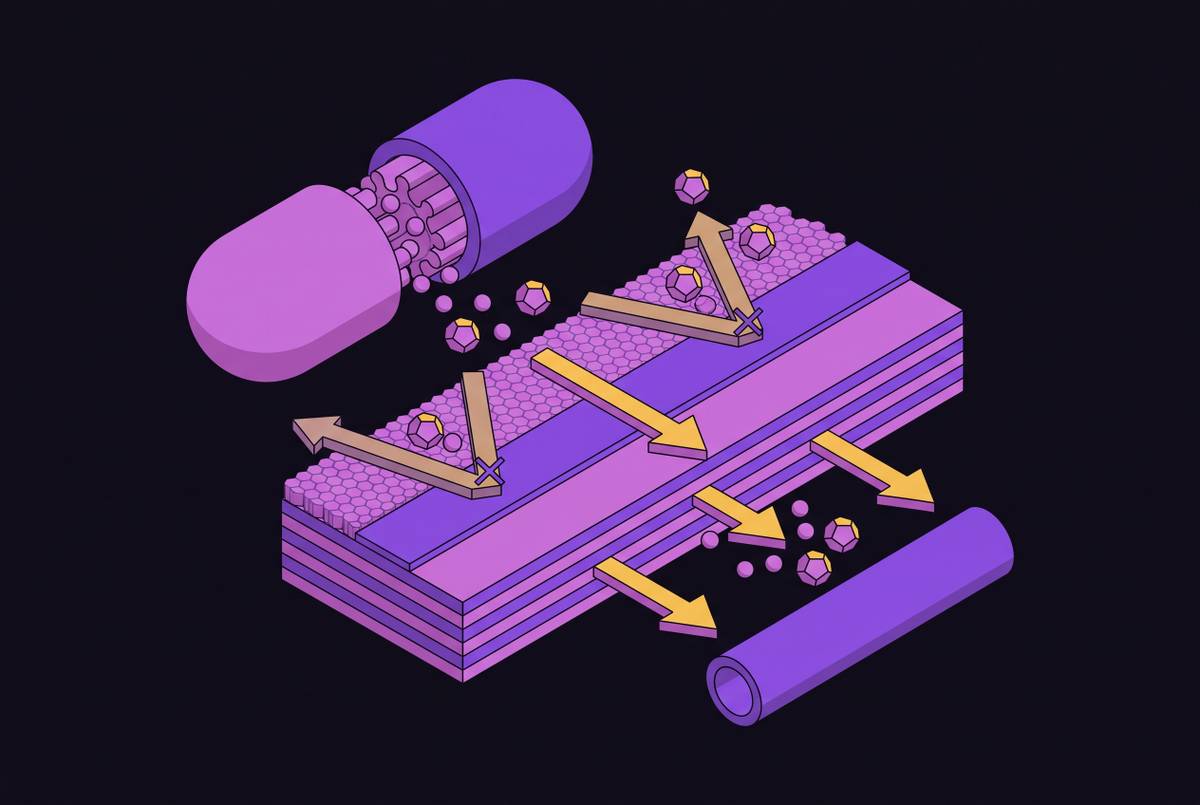
The gastrointestinal tract breaks down proteins, including the peptide bonds that hold their amino acids together. GLP-1 peptides enter that environment as substrates for digestion. Proteolytic enzymes in the stomach and small intestine degrade them before meaningful absorption can occur. The obstacle is built into the route. An excipient may change a formulation’s behavior, but it does not remove the digestive system’s function.
For drug that survives gastrointestinal degradation and is absorbed, hepatic first-pass metabolism presents a further elimination stage before systemic circulation. These barriers act in sequence, reducing the amount available to reach target tissue. The oral peptide GLP-1 formulations described here have bioavailability at or below approximately one percent. The dose given must therefore be much larger than the amount that reaches systemic circulation. Low absorption creates a demanding relationship between dose and exposure.
Does that establish an immutable numerical limit for every future oral formulation? The anatomical argument is stronger than that numerical claim. It establishes an enduring source of peptide destruction, rather than a universal thermodynamic law fixing bioavailability at a particular percentage. Oral small-molecule GLP-1 receptor agonists take a different approach by not being peptides at all. That pivot avoids peptide digestion through a change in molecular class.
What the nasal mucosa actually is — the anatomy that makes a different outcome possible
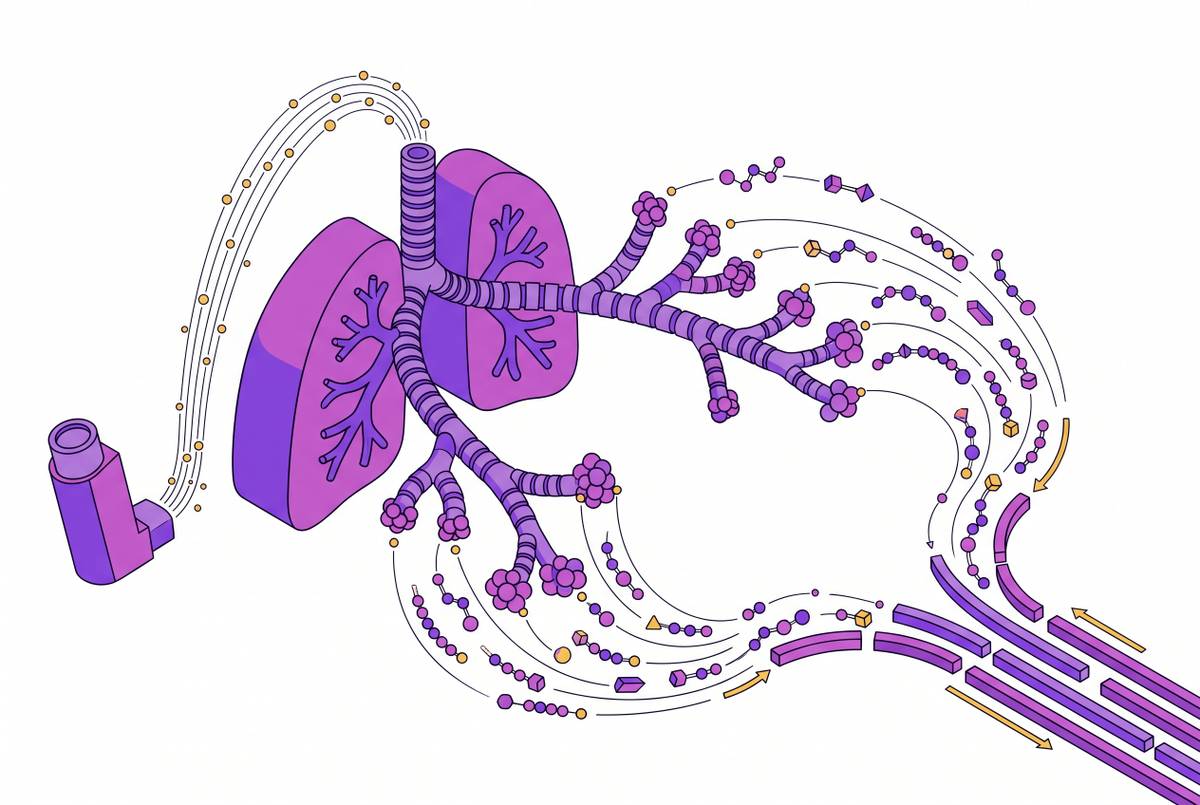
The nasal cavity presents an extensive mucosal surface with a rich vascular network close to the epithelium. Microvilli add to the area where absorption can take place, while nearby capillaries give drug that crosses the epithelial barrier a short path into blood. Surface area provides an interface for uptake, and vascular proximity provides an exit into circulation. This physiological environment differs from that of intestinal digestion.
Drug absorbed into the nasal vascular network enters systemic circulation without the hepatic first-pass stage associated with oral delivery. That bypass does not mean the liver can never encounter the drug later. The distinction is important because it separates avoidance of a delivery-stage loss from resistance to metabolism everywhere in the body.
The nasal environment also has a substantially lower enzymatic burden than the gastrointestinal tract. Peptides therefore avoid the combined journey through digestive proteolysis and hepatic first-pass metabolism, although local nasal enzymes remain relevant. Even with these advantages, some drug may fail to pass through the epithelium. Together, however, they explain why nasal administration can support rapid delivery for systemic and neurological targets. After the drug reaches this tissue, the bloodstream is not its only possible destination.
The two absorption pathways the nasal cavity offers — systemic and direct-to-brain
Systemic nasal uptake occurs when drug crosses the respiratory epithelium and enters the bloodstream. For a brain target reached through this pathway, the drug must subsequently cross the blood-brain barrier. This branch of delivery shares the systemic endpoint of subcutaneous injection, reaching the circulation without a needle. Its value rests on mucosal absorption and first-pass bypass.
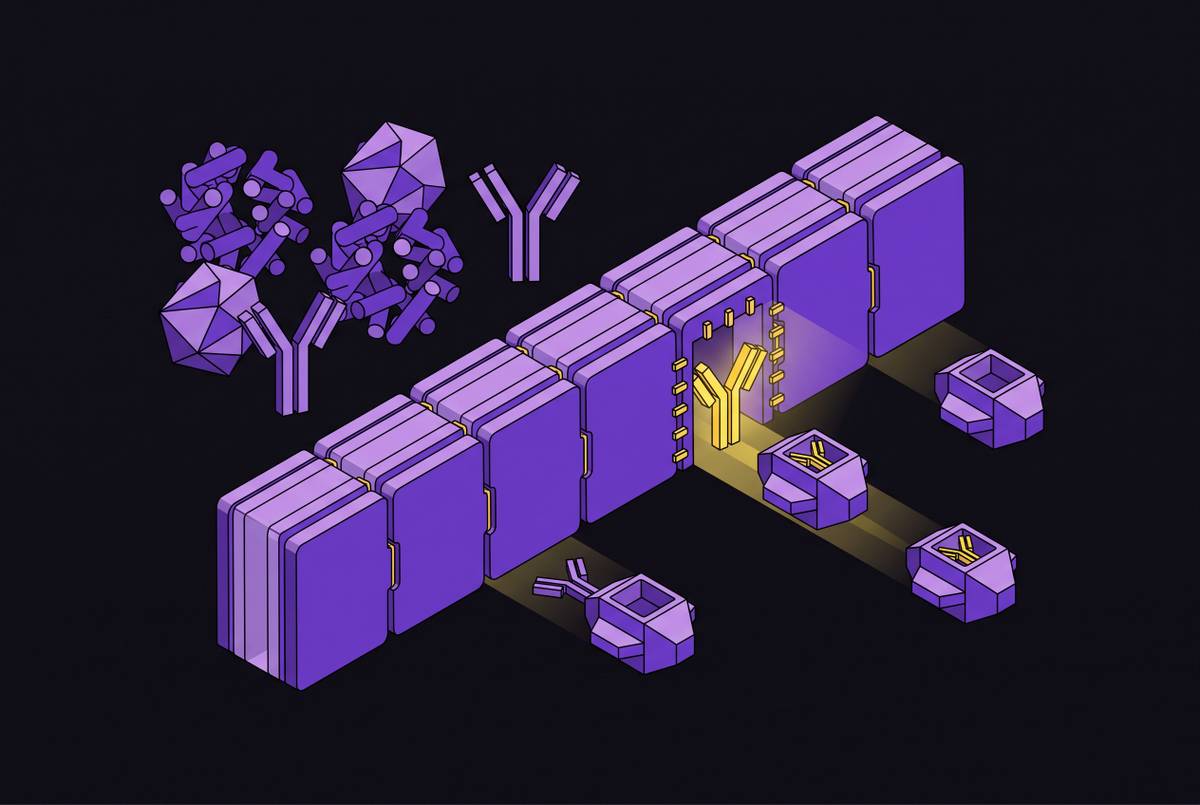
The olfactory pathway provides a separate connection between the nasal cavity and the central nervous system. Drug can travel through pathways associated with the olfactory nerves and their sheaths, reaching the CNS without crossing the blood-brain barrier in the conventional blood-to-brain sense. “Bypass” describes an alternative anatomical entrance. The trigeminal pathway offers another connection through sensory nerves associated with the nasal mucosa. It gives drug a separate way to reach deeper CNS structures.
These routes should not be collapsed into a single claim that nasal drugs go straight to the brain. Nasal administration can engage both vascular and direct neural pathways, but their contributions are separate questions. Oral and subcutaneous delivery do not provide this same nasal neural entrance. For GLP-1 research on appetite regulation, addiction, or dementia, that difference offers a way to target the brain as well as achieve noninvasive systemic exposure. Demonstrating access, however, is only the beginning of demonstrating useful delivery.
The real constraints of nasal absorption and why they are engineering problems, not structural ceilings
Mucociliary clearance, short residence time, and limited epithelial absorption restrict how much nasally administered drug reaches its destination. Clearance can remove drug before it crosses the mucosa, while epithelial barrier function limits uptake during the time available. Solubility further affects the extent and consistency of absorption. The available deposition volume is also small. That small volume limits the mass each dose can deliver, even when the formulation is well absorbed.
Unlike clearance, enzymatic degradation can destroy the peptide’s molecular structure, so it would be inaccurate to describe every nasal constraint as purely kinetic. Nasal enzymatic activity is substantially lower than gastrointestinal proteolytic activity, which makes protection within the formulation a different task from surviving the digestive tract. Lower activity offers an advantage while leaving some degradation possible.
Why call these engineering problems if some are anatomical? Because formulation can alter residence time, epithelial access, solubility, and protection within the environment where uptake occurs. It cannot make the nasal cavity arbitrarily large or remove every barrier. Nor does calling a problem tractable establish that it has been solved for GLP-1. The central contrast is between drug being cleared before absorption, which is a kinetic competition, and peptide bonds being cleaved during digestion, which is chemical destruction.
How mucoadhesive and nanoparticle formulations address each nasal constraint specifically
Mucoadhesive agents on nanocarrier surfaces prolong contact with the nasal mucosa, giving drug more time to absorb before clearance. Their purpose follows directly from the residence-time problem. They do not create an absorption pathway where none exists. Instead, they extend the interval during which an existing pathway can operate.
In situ gelling systems address contact time through a different formulation behavior. They are administered as liquids and then gel on the mucosal surface in response to temperature, pH, or ion concentration. Gelation keeps the drug in contact with the absorption site for longer. It does not require a mucoadhesive coating on the drug carrier itself.
Surface-active polymers such as chitosan can transiently open tight junctions in the nasal epithelium, extending the effective size range for peptide absorption. GLP-1 at approximately 3.3 kDa falls within the range these systems have been demonstrated to handle. Size compatibility establishes that the peptide’s dimensions permit consideration of this formulation approach.
Permeation enhancers including dodecyl maltoside and tetradecyl maltoside have established safety profiles and have shown transient improvements in absorption in preclinical and clinical settings. Those findings do not establish the safety or bioavailability of every GLP-1 formulation containing them. The design of a nanocarrier can also help with solubility, while the carrier can protect the drug from local degradation. The platform case rests on specific formulation levers.
Why the nasal route opens neurological indications that systemic delivery cannot reach as efficiently
GLP-1 receptors are expressed in areas of the brain that play a part in impulse control, reward, and appetite regulation. For these targets, systemic delivery requires drug to reach the brain after distribution through the circulation and transit across the blood-brain barrier. Direct olfactory and trigeminal pathways offer another approach. They can take drug to the brain without those steps through the circulation and across the blood-brain barrier. Whether that access yields a better treatment remains an experimental question.
Intranasal nanoparticle-based GLP-1 formulations have demonstrated rapid enhancement of learning and memory in Alzheimer’s disease animal models. That is preclinical proof of concept for a delivery strategy in neurodegeneration. The distinction cannot be treated as a footnote. An animal result links a formulation and route to an observed response under experimental conditions. It does not establish that the same exposure, mechanism, or benefit will occur in established human disease.
Low-certainty randomized evidence in patients with established Alzheimer’s disease found no improvement in memory and cognition with GLP-1 receptor agonists compared with placebo. That finding does not directly test every intranasal nanoparticle approach. Equally, a new route cannot be assumed to reverse it. Delivery can improve access to a target without proving that acting on that target changes the course of disease.
Parkinson’s disease and addiction raise related targeting questions because olfactory and trigeminal pathways provide mechanisms to reach dopaminergic and reward-circuit structures. Population-level studies have associated GLP-1 receptor agonists with reduced risks of addiction involving alcohol, cannabis, stimulants, and opioids. Those associations come from systemic administration. They neither establish causation nor validate intranasal GLP-1 for addiction. The route’s distinctive role is to help test and potentially deliver a CNS mechanism once that mechanism is established, rather than to guarantee neurological efficacy in advance.
What non-injection GLP-1 options mean for patients who cannot sustain injectable therapy
Needle phobia, worries about infection, and healthcare costs can make it hard to keep using injectable treatment over long periods. Real-world GLP-1 discontinuation is high, so route design has consequences beyond laboratory absorption measurements. For patients who cannot tolerate injections, the relevant comparison includes dose burden, systemic exposure, long-term safety, and the practical demands of administration. These criteria explain the appeal of a nasal option without establishing it as the best available treatment.
Oral peptide delivery needs no needles, but digestive barriers mean that a large dose is needed for a small fraction to be absorbed. That imbalance can create tolerability and cost pressures, although low bioavailability alone does not establish poor clinical efficacy or adherence. Intranasal administration allows noninvasive self-administration without help from a professional and fits the needs of people who take medication often. Its potential adherence benefit is therefore plausible. Matching or approaching injectable efficacy, however, remains a translational goal rather than a human outcome established by the evidence presented here.
More work is needed to confirm the findings, check long-term safety, and study the effects of repeated doses. Robust toxicology and the integration of innovative polymers with optimized devices are necessary parts of that work. A nanoparticle-enabled platform addresses formulation variables within this agenda. For patients, the promise is a route that may be easier to use while safely delivering enough drug. That promise depends on evidence from the finished formulation and delivery system.
The asymmetry is therefore practical as well as scientific. Oral peptide formulations must contend with an organ system that digests their molecular class, whereas nasal formulations can avoid that journey and work on residence time, permeability, solubility, and local protection. The latter is a different category of delivery problem. It gives intranasal GLP-1 a strong research rationale for people who cannot sustain injections, while leaving safety, reliable exposure, and clinical benefit to be demonstrated.
Sources
- Full article: Advances in mucoadhesive and mucus-penetrating materials, nano-formulations, and in situ gelling systems for nasal drug delivery
- Correction: Shrewsbury, S.B. The Upper Nasal Space: Option for Systemic Drug Delivery, Mucosal Vaccines and “Nose-to-Brain”. Pharmaceutics 2023, 15, 1720
- Intranasal Drug Delivery Technology in the Treatment of Central Nervous System Diseases: Challenges, Advances, and Future Research Directions - PMC
- Progress in nasal drug delivery research based on biomaterials
- Optimizing Absorption for Intranasal Delivery of Drugs Targeting the Central Nervous System Using Alkylsaccharide Permeation Enhancers